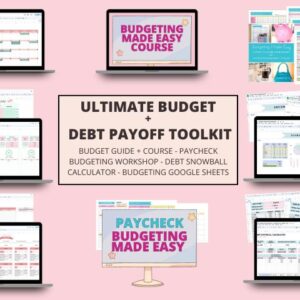
Are you wondering if Snowball vs. Avalanche method is better? I have a Snowball vs. Avalanche Calculator Google Sheets so you can check.
If you have multiple credit cards, personal loans, or other debts, keeping track of everything can feel overwhelming. You have different balances, interest rates, minimum payments, and due dates to remember. And when you’re trying to pay everything off, it’s hard to know which debt to focus on first.
A Google Sheets debt payoff spreadsheet can help you organize your debts in one place, compare payoff strategies, and estimate when you could become debt-free.
I’ve been there myself. When I was paying off between $10,000 and $30,000 in debt, one of my biggest struggles was staying organized. It was hard tracking due dates and figuring out how much money I needed to set aside for upcoming bills.
I created my own budget worksheet and bill payment checklist to keep everything organized. I even saved my account logins in a bookmarks folder so I could quickly access them when it was time to make payments.
Today, I prefer using Google Sheets because it can automatically calculate the numbers for me. That’s why I created my Snowball vs. Avalanche Debt Calculator Google Sheets to help people organize their debts and figure out which payoff strategy works best for them.
Here’s how tracking multiple debts in one spreadsheet can make managing your money easier.
Why Track Multiple Debts in One Google Sheet?

When your debts are spread across different credit card accounts, loan statements, and payment reminders, it’s easy to lose sight of the bigger picture.
Keeping everything in one spreadsheet helps you answer important questions:
- How much debt do I owe altogether?
- Which debts have the highest interest rates?
- How much do I need to pay each month?
- Which debt should I pay off first?
- How long could it take me to become debt-free?
Instead of trying to remember all these details, you can use a spreadsheet to organize your information and make a plan.
What Information Should You Track for Each Debt?
To manage multiple debts effectively, you need to understand what you owe and what you’re paying.
The most useful information to track includes:
- Debt name: The name of your credit card or loan.
- Current balance: How much you still owe.
- Interest rate: The annual percentage rate (APR).
- Minimum payment: The amount you need to pay each month.
- Payment due date: When the payment is due.
- Extra payment: Any additional money you plan to put toward the debt.
These details help you understand your debt situation and compare different repayment strategies.
It’s also helpful to keep a separate bill payment checklist so you can track which payments have been made and which are coming up.
This is especially important if you struggle with remembering due dates or need to set money aside for bills before they’re due. I learned firsthand how much easier it is to manage payments when you have a system. You can find more tools for managing your money and organizing everyday life in my shop.
How to Choose Which Debt to Pay Off First
Once you’ve organized your debts, the next step is deciding which one to prioritize.
Two popular strategies are the debt snowball and debt avalanche methods.

Debt Snowball Method
The debt snowball method focuses on paying off your smallest balance first while making minimum payments on your other debts.
Once the smallest debt is paid off, you put the money you were paying toward it onto your next debt.
I prefer this method because it helps you see progress sooner. Paying off a credit card completely can feel like a huge accomplishment, especially when you’ve been overwhelmed by several balances.
You also have one less debt to manage, and you can use that freed-up payment to help pay off the next one.
Debt Avalanche Method
The debt avalanche method focuses on paying off the debt with the highest interest rate first while making minimum payments on your other debts.
This approach can save you money on interest compared with the snowball method when you’re comparing the same debts and repayment budget.
However, it may take longer to eliminate your first debt, depending on your balances and interest rates.
Neither strategy is automatically best for everyone. Your financial circumstances, motivation, and ability to stick with a plan matter, too.
Use My Google Sheets Debt Calculator to Compare Your Options
You could manually track your debts in a basic spreadsheet, but calculating interest and estimating payoff dates for several accounts can become complicated.
That’s why I created my Snowball vs. Avalanche Debt Calculator Google Sheets.
Instead of figuring out all the calculations yourself, you can use my spreadsheet to compare your options and see how different payoff methods affect your repayment plan.
The calculator helps you:
- Compare payoff strategies: See how the snowball and avalanche methods compare using your debt information.
- Calculate interest: Understand how interest affects your repayment plan.
- Estimate payoff dates: See when you could finish paying off your debts under different approaches.
- Try a custom method: Explore a different payoff order if neither standard strategy fits your preferences.
Having these calculations in one place makes it easier to understand your options and choose a strategy that fits your goals.
Rather than guessing which debt to pay off first, you can make a more informed decision using your own numbers.
Don’t Forget to Look at Your Interest Rates
There’s something else I learned while paying off debt: organizing your payments isn’t always enough.
When I was struggling with high-interest debt, so much of my money went toward interest that I felt like I was spinning my wheels in quicksand. I was making payments but wasn’t seeing the progress I wanted.
I wish I’d known sooner that I didn’t have to figure everything out alone.
I’m currently paying off credit card debt with the help of a nonprofit debt relief company that helped reduce my interest rate to 0%.
Your options will depend on your circumstances, creditors, and the terms of any program. But if high interest is making it difficult to pay down your balances, it may be worth exploring whether a lower interest rate or a legitimate nonprofit credit counseling program could help.
Learn How to Pay Off Debt Faster
In my Pay Off Your Debt in Half the Time workshop, I explain how to talk to credit card companies about lowering your interest rates and where to find legitimate nonprofit organizations that may help with debt management and repayment plans.
Some eligible plans may offer significantly reduced interest rates, depending on the creditors and terms.
Combining a debt payoff spreadsheet with a strategy for reducing interest can help you understand your options and make more progress toward your goal.
How to Stay Organized When You Have Multiple Debts
Once you have your debts organized, make a habit of reviewing your spreadsheet regularly.
Here are three ways to stay on track:
- Review your balances monthly. Update your debt information so you can see how much you’ve paid off.
- Keep track of due dates. Use a bill payment checklist to avoid overlooking upcoming payments.
- Celebrate your progress. Recognize each debt you eliminate, even if you still have other balances to pay.
You don’t need to spend hours managing your spreadsheet. The goal is to have a simple system that helps you understand your finances and follow your payoff plan.
Get My Snowball vs. Avalanche Debt Calculator

Tracking multiple debts doesn’t have to be complicated. When you organize your balances, interest rates, and payments in one place, it’s easier to understand your situation and decide what to do next.
My Snowball vs. Avalanche Debt Calculator Google Sheets helps you compare payoff methods, calculate interest, and estimate your debt-free date without having to build the formulas yourself.
If you’re also struggling with high interest rates, check out my Pay Off Your Debt in Half the Time workshop to learn about options for lowering interest and finding legitimate debt management assistance.
You don’t have to tackle everything at once. Start by getting organized, choose a payoff strategy, and take it one payment at a time.